Comprehensive tuition-free, pre-professional fine arts programs for blind and visually impaired adults, and professionals working in the audio description field
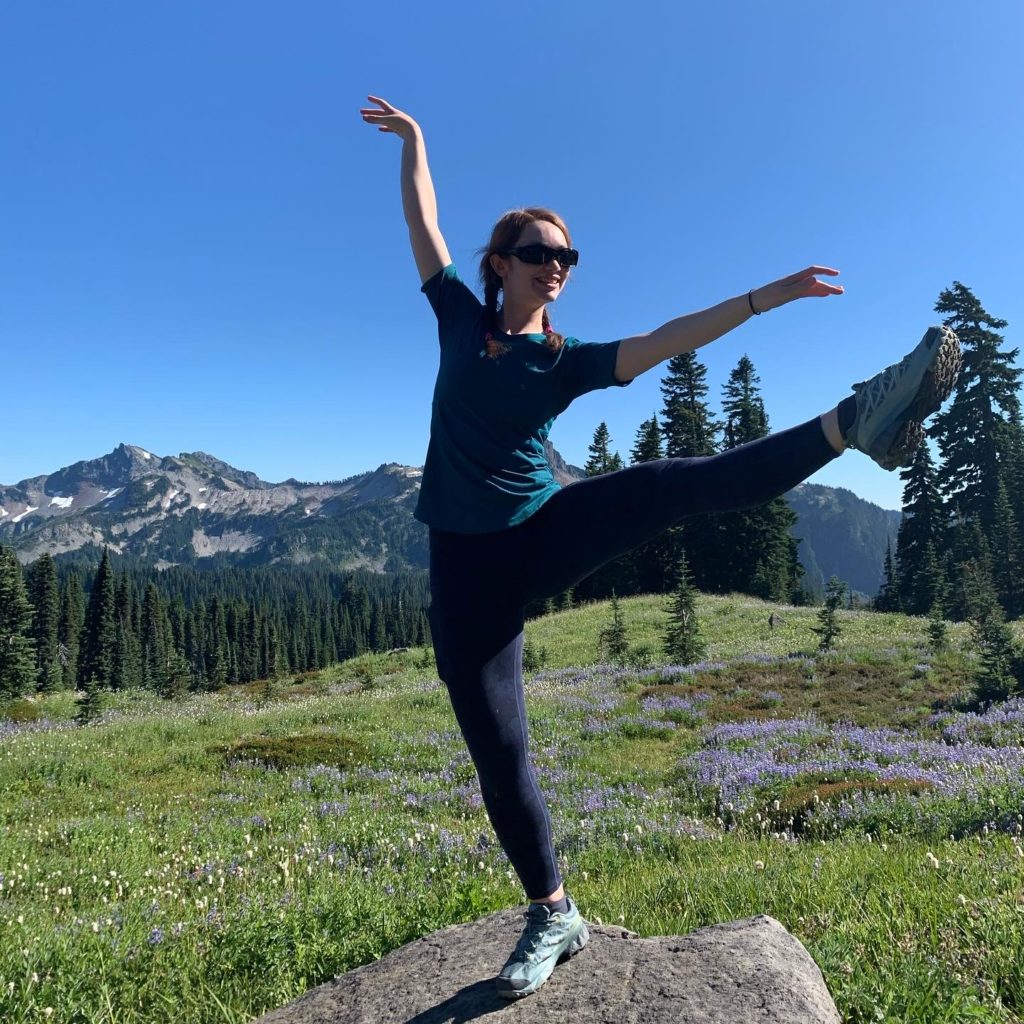
Hannah stands on a large rock in a mountain meadow, surrounded by wildflowers and tall pine trees. She stands with her left leg held straight and supporting her, while her right leg is lifted high to the side, nearly horizontal. Her left arm curves overhead, and her right arm stretches toward her raised foot, creating a diagonal line across her body. She wears leggings, a short-sleeve shirt, trail shoes, and sunglasses, with her hair in two braids. The sky is clear, and snow-capped mountains are visible in the distance.
About Hannah Werbel:
Trained in classical ballet, with forays into jazz, contemporary and modern swing dance, Hannah has been dancing and playing with music since before she can remember. Growing up, she trained with former Tokyo Ballet soloist Michiko Black, where she learned the fundamentals of Russian classical ballet technique. As an adult, Hannah has expanded her dance repertoire to include musical theater jazz, contemporary, and west coast swing (modern swing dance). She has performed in several local performances in Seattle, WA, where she currently lives.
As a student of Dark Room Ballet herself, Hannah is excited to share her love of music and expression with the community. She believes in teaching from a perspective of curiosity and play, and is looking forward to helping students discover a sense of expression within the structure of ballet.
About This Intensive Workshop Series:
Musicality Concepts in Ballet is a special intensive workshop series that analyzes and reinforces select musicality concepts in the context of a pro-level ballet technique class. Each week, we will explore two contrasting concepts and experiment with them through different combination-based movement patterns. This workshop is designed for disabled dancers who have been dancing ballet consistently for at least one year and have strong ballet vocabulary recall. (If you’re taking ballet class every week, this series is for you!)
Workshop Dates
They will be offered virtually on Zoom.
The format of each workshop is similar to a ballet technique class, but with an open floor for questions after each few combinations.
Each workshop is two hours long:
Saturday, November 14, from 1 PMto 3 PM EST
Saturday, November 21 from 1 PM to 3 PM EST
To register for this workshop series, send an email to [email protected]with the subject line Musicality Concepts in Ballet
Announcing a new series of threeno diagram anatomy workshops open to all (with priority given to blind and visually impaired students), no prior experience required.
This series is specifically related to histology, or anatomical facts about cells, how cells create tissues, the characteristics of those tissues, and how they operate in the body biomechanically. The dates and topics will be:
Saturday, October 10, from 4 to 6 pm ET: No Diagram Anatomy Presents: Histology of Muscle
Saturday, October 17, from 4 to 6 pm ET: No Diagram Anatomy Presents: Histology of Bone and Cartilage
Saturday, October 24, from 4 to 6 pm ET: No Diagram Anatomy Presents: Histology of Connective Tissue
All workshops take place online via Zoom. To register for the workshops, please write to [email protected] to complete the registration process.
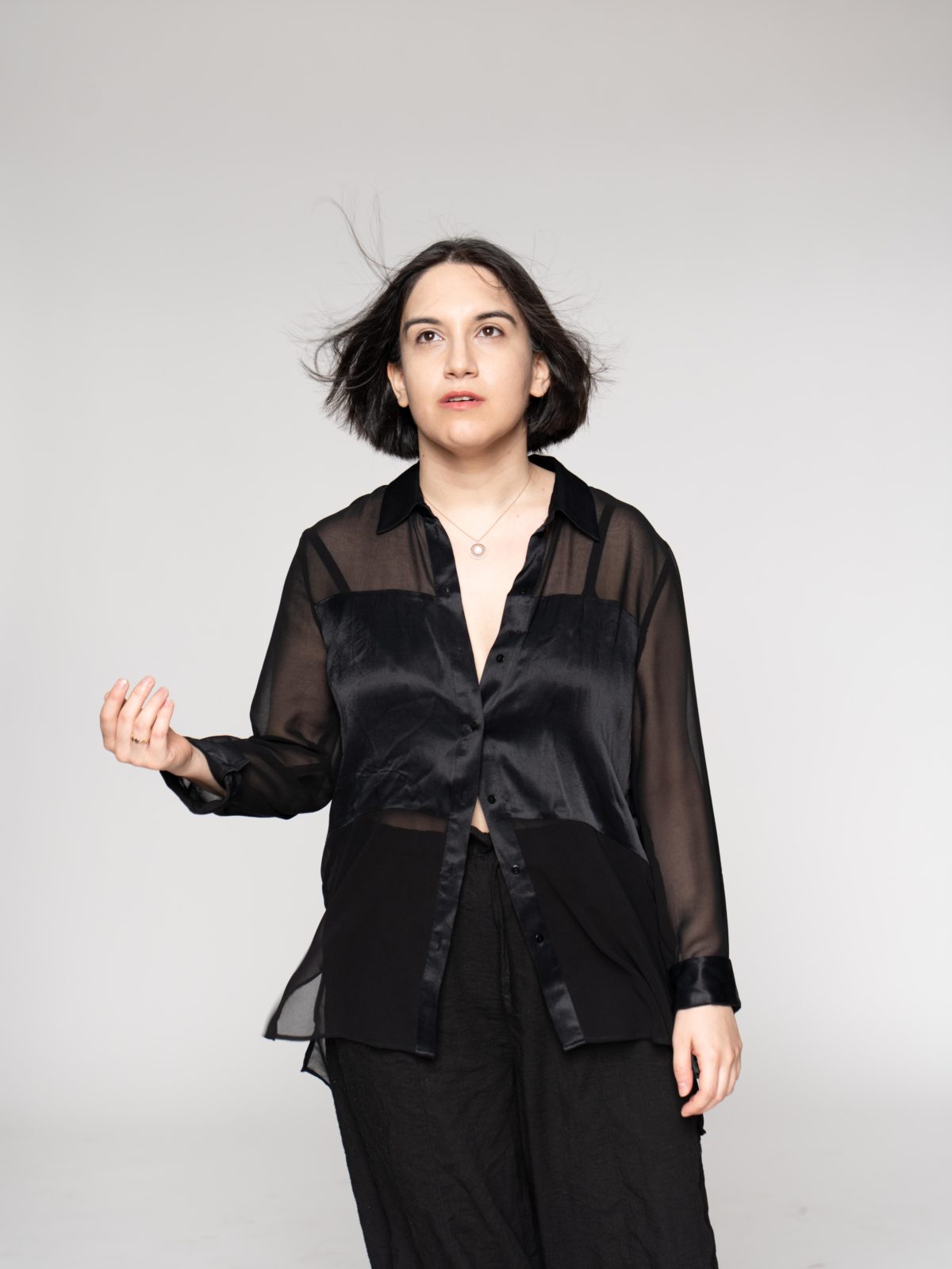
Luna Vintner stands against a light gray background wearing a sheer black blouse and black pants, looking slightly upward with one hand raised. Her short dark hair slightly windblown.
Luna Vintner is a New York–based multidisciplinary artist working across music, movement, and acting. She is a multi-instrumentalist, composer, and improviser whose work explores the relationship between sound, embodiment, and accessibility.
Originally from Turkey, Luna moved to the United States to pursue drama training after completing her bachelor’s degree in psychology with a minor in music. She composes original music for short films and performance works, and she is also an independent singer-songwriter, creating intimate interdisciplinary projects that blend music, storytelling, and physical expression.
As a legally blind artist, her practice aims to create inclusive improvisational spaces where music and movement meet as equal creative partners, dissolving traditional hierarchies between dancer and musician. Her work includes original music releases, film composition, and the creation of listening-based movement practices such as Moving In and Out of Tune, designed in collaboration with blind and visually impaired movers.
About This Workshop Series:
Moving In and Out of Tune is a listening-based movement creation practice developed by Luna Vintner. The workshop centers improvisational exchange between live music and movers, inviting participants to create sound and movement together in real time.
Through guided prompts and theme-based improvisational scores, dancers explore music not as accompaniment, but as an ever-changing landscape for embodied response. The practice supports the discovery of surprising movement vocabulary through deep listening, intuition, and presence.
Offered virtually in collaboration with Dark Room Ballet, this series is designed for blind and visually impaired movers, emphasizing accessibility, non-visual connection, and shared artistic authorship between musician and dancer. Instrumentalists are welcome to participate, joining the workshop as creative collaborators in this live improvisational space.
Workshop Dates and Details:
Moving In and Out of Tune: a listening-based movement creation workshop series with live music performed by acclaimed musician, actor, and dancer, Luna Vintner. (Listen to Luna on Spotify!)
Workshops will be offered virtually on Zoom.
Each workshop is two hours long:
Workshop #1: Sunday, August 2, 2026 from 12 PM to 2 PM (Eastern/New York Time)
Workshop #2: Sunday, August 9, 2026 from 12 PM to 2 PM (Eastern/New York Time)
Workshop #3: Sunday, August 16, 2026 from 12 PM to 2 PM (Eastern/New York Time)
Workshop #4: Sunday, August 30, 2026 from 12 PM to 2 PM (Eastern/New York Time)
To register for this workshop series, send an email to [email protected] with the subject line Moving In and Out of Tune
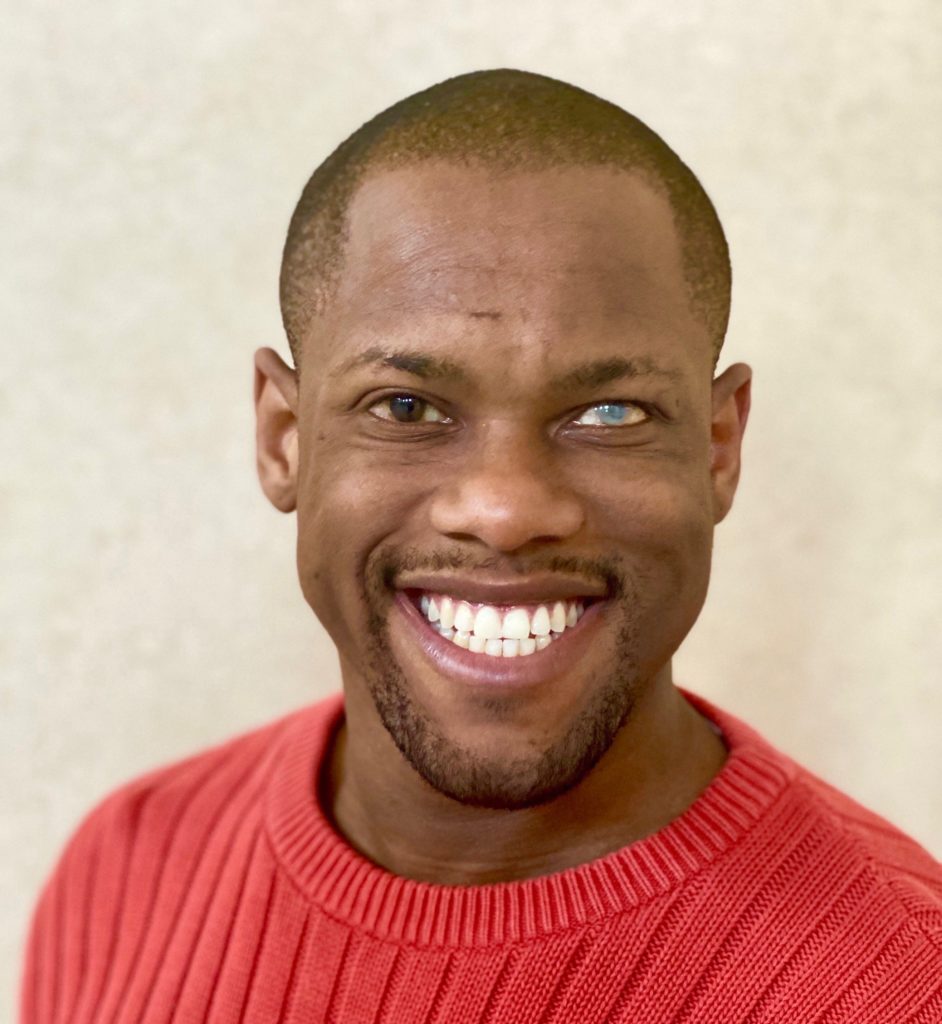
A headshot photo of Davian “DJ” Robinson. He smiles widely, and is wearing a red sweater.
About Davian “DJ” Robinson:
Davian “DJ” Robinson is a passionate and boundary-breaking visually impaired dancer, choreographer, and performer. Drawing from his lived experience and athletic movement style, he creates choreography that is both physically powerful and emotionally resonant. His work blends dynamic storytelling with raw embodiment, inviting audiences into a world where rhythm, resilience, and adaptability redefine how we move and connect. Through both performance and education, Davian challenges conventions and opens new possibilities for inclusive expression in the arts.
About This Intensive Workshop Series:
Sensory Beyond Sight cultivates movement using breath, touch, spatial hearing, weight, and proprioception rather than sight. Developed by visually‑impaired choreographer DJ Robinson, the practice empowers participants to:
• Discover liberating, imaginative movement without visual imitation. • Deepen body awareness in time and space. • Build trusting partnerships that translate verbal cues into motion.
Tactile & Creative Supplies:
DJ often designs choreography using a tactile drafting board/felt board.
Magnetic or Velcro pieces represent dancers and pathways, allowing him to map formations by touch and communicate spatial ideas clearly.
This reminder models how tactile tools can replace sight‑based diagrams.
What follows are shopping links for the different equipment options that you can choose to use during the workshop series and continuing on in your own choreographic practice:
Wikki Stix Neon Pak (Amazon link) Reusable, bendable wax-coated yarn sticks for creative tactile art and sensory play. Great for children, educational projects, and travel activities.
ANLIOTE 12″×9″ Dry-Erase Whiteboard (Amazon link) Handheld double-sided dry erase board, perfect for quick notes, learning, or drawing. Includes markers and erasers.
DRAFTSMAN Tactile Drawing Board(APH link) A specialized tactile drawing board with stylus and film sheets, allowing blind or visually impaired users to create raised-line graphics. Durable and portable, offered by the American Printing House for the Blind.
Picture Maker Wheatley Tactile Diagramming Kit (APH link) A diagramming kit with a felt board and velcro-backed pieces, allowing for building tactile diagrams and graphics for orientation, mobility, or educational work.
Workshop Dates and Details:
This workshop series is cumulative, and each of the four workshops builds on the skills developed the week before.
All workshops start at 4 pm (Eastern Time), and are 90 minutes long.
Friday, May 15, 2026
Friday August 7, 2026
Friday September 18, 2026
Friday October 9, 2026
Friday November 6, 2026
Friday December 4, 2026
To register for this transformative workshop series, send an email to [email protected]with the subject line Sensory Beyond Sight.
Tell Your Story: An Introduction to Narrative Podcasting with H. May
Workshops will be held via Zoom on Tuesdays from 3-5 PM Eastern (New York) Time, June 16, June 30, July 14, July 28, August 11, and August 25.
Student Cap: 10
This six-week course is designed to introduce blind and low-vision artists to sound design, storytelling techniques, recording / editing processes and tools, and organizational approaches useful in the production of narrative podcasts. This workshop is designed to take participants through the process of writing a short story, enhancing it through sound, and sharing it with others. H. May is a blindish theatre artist trained in a multitude of techniques for generating performance material from personal experience. As a theatre director married to a sound designer and podcast producer, their work consistently benefits from the incorporation of sound and audio description as an integral part of storytelling. This class is designed to meld theatre and digital sound recording techniques in the creation of imaginative narrative podcasts.
While primarily a live theatre artist, H. increasingly finds themself turning to sound art as a means of storytelling that scratches their sensory desires and their exploratory impulses. As a blindish artist largely isolated from working with other blind and low-vision artists, H. looks forward to facilitating this workshop for the opportunity to learn how to make the art we hope to hear in the world alongside other members of the blind community.
Schedule: Six two-hour sessions, every 2 weeks starting June 16.
June 16, Week One – Introduction to Podcasting and Preparing the Voice
Topics include: A brief overview of podcasting (what it is, why it is popular); discussion of podcasts folks are listening to and why; introductory vocal exercises
Homework: Listening to sample podcasts, bringing in an example of something they like, and telling the story of an object that means something to them
June 30, Week Two – Storytelling (what makes for good storytelling in terms of structure)
Topics include: Discussion of sample podcasts from homework as regards how they tell stories
Homework: Reading part of the script analysis text Backwards and Forwards, analyzing a fairy tale for what makes it compelling, reworking object story to implement storytelling techniques
July 14, Week Three – The nature of sound and recording sound
Topics include: techniques for recording sound on cell phones, overview of cheap recording devices, demonstrations of sound recordings
Homework: Record something familiar that is instantly recognizable and record something familiar that is hard to recognize
July 28, Week Four – Combining story and sound through editing
Topics include: listening to examples of sounds used to heighten storytelling. These sounds include multiple voices for characters, underscoring with music, copyright issues, other sound effects and sound effect libraries
Homework: Record your object story but bring sound into it.
August 11, Week Five – Continuation of Week Four, working with students on their projects
Homework: Continuing Editing Object Story
August 25, Week Six – Organizing / Planning for a longer series and publishing your podcast
Topics include: Learning how to map out a season, assessing sustainable timelines, introduction to podcasting platforms
About H
H. May (they / them) is a blindish* Professor of Theatre at Hobart and William Smith who loves theatre for its adventures. H has reveled in a career that has allowed them the grace and flexibility to be always in transition, transforming their artistry and scholarship to suit the needs of the moment. And their current moment is building creative spaces and collaborations that embrace the aesthetic possibilities of multi-sensory art. H. is fortunate to have a spouse who is a professional sound designer and podcast producer. Together they have been integrating sound into theatre productions for three decades, and have broadened this work into film and audio production over the past six years. H.’s autoethnographic film “Awaiting Tiresias” explores the shifting emotional landscape of the early stages of a blindness diagnosis. The film is fully audio described. “Awaiting Tiresias” was screened at the Great Lakes International Film Festival, the Together! Disability Film Festival, was a semi-finalist for the Blow-Up Arthouse Filmfest in Chicago, and won Disability Awareness and Contemporary Issues / Raising Awareness Awards of Merit from the IndieFEST Film Awards. They have also performed a livestream version of “Awaiting Tiresias” at multiple conferences, including the Hong Kong Academy of Performing Arts Digital Humanities Conference and the Digital Research in the Arts and Humanities Conference (UK).
While H.’s work in the theatre has primarily been as a director, they have enjoyed learning among fellow professional artists at performance and devising workshops and residencies with Indy Convergence (2019), La MaMa Umbria International Directors Symposium (2014, 2017), Dell’Arte International Summer Intensive (2015), Pig Iron Theatre (2018), and Directors Labs North (2015) and West (2014, 2017).
As an artist who has gone blind in the late stage of their career in a rural community with few other blind people (never mind in the theatre), H. has largely had to teach themself new approaches to theatre. They were thrilled to discover Dark Room Ballet a few years ago, the first blind community they’d experienced. Unsurprisingly, it was also the first audio description training they received that actually treated blind audiences as full collaborators and artists. They are honored and excited to be among the rotating faculty for Dark Room Ballet, where they can continue to learn in community with fellow blind and low-vision artists.
* While they could use the term “legally blind,” H. fights against medicalized gatekeeping and feels that “blindish” is a more accurate description of the way their sight fluctuates depending upon the circumstances.
To Register for this course please email [email protected] to receive the intake questions and instructions for scheduling an interview with H.
Beginning May 30 Five Courses on Saturdays from 4-6pm
Registration is now open! To register for any of these tuition-free workshops, please send an email to [email protected]
This series of five online workshops covers a variety of topics related to audio description for dance and are designed not only as professional development for audio describers, but also as essential education for blind and visually impaired audiences, choreographers, dancers, movement educators, and administrators for arts presenting organizations.
Like all Dark Room curriculum, all of these workshops are designed for the educational needs of blind and visually impaired adults, and these workshops are meant to serve specifically: blind and visually impaired dancers, blind and visually impaired audio description consultants and editors, audio describers of all vision levels, access professionals working for arts organizations and educational institutions, choreographers, dramaturges, and performing arts educators.
All workshops are tuition-free and take place online via Zoom.
Course Description
May 30, 2026: How to Hire an Audio Describer
This workshop is designed to help prepare choreographers and arts administrators to effectively collaborate with a professional audio describer, ideally to integrate the audio description consultant as a full member of the production team. Audio description consultants will learn about their rights as professionals, the role of blind audio description consultants will be discussed, and models will be shared demonstrating how true artistic excellence can be achieved when all parties involved in the audio description process understand their role and purpose.
June 6, 2026: Experimentation in Vocal Tonality for Audio Description for Dance
Most audio description used to support television and film is recorded with a neutral tone of voice. However, we here in the Dark Room propose that dance is a very different art form that deserves a different approach to audio description. Be ready to listen to some interesting examples of audio description, practice using the voice expressively, and pair sound and movement together in artistically effective ways.
June 13, 2026: Script Preparation Strategies for Audio Description for Dance – Multiple Pathways!
Where do audio description scripts come from? It depends! This workshop will discuss multiple approaches to getting started on an audio description script, depending on multiple factors: access to artists involved with the project, prior knowledge, type of audience, style of performance, timeframes, and so on and so forth. This is a great introduction to script writing for audio description novices, and a great opportunity for audio description fans to express themselves.
June 20, 2026: Finding Purpose: The Logic of Arts Communication in Audio Description for Dance (BRAND NEW CURRICULUM!)
Audio description for dance is an art form, it is dance made manifest in the voice and in language. As a former teacher of formal logic and language analysis, Krishna presents ways to use the logic of language to decode what artists say about their work, how the logic of language can be used to understand the artistic priorities of any specific dance project, and how to check your audio description scripts for logical flow, keeping audiences confidently immersed in the performance.
June 27, 2026: Yeah, But Was It Good? Listening to Audio Description for Dance Critically (NEW AND IMPROVED VERSION!)
Audio description for dance performances is still very rare, but that doesn’t mean that blind and visually impaired audiences should be satisfied when the audio description on offer is of low quality. Students are going to get to listen to many, many examples of audio description for dance, and talk about what works and what doesn’t work, and what we might change in order to improve it.
Krishna Washburn is the Artistic Director of Dark Room Ballet. She teaches traditional blind dance technique at the introductory, open, and professional levels, dancer’s anatomy for blind and visually impaired learners (No Diagram Anatomy), and audio description for dance. She holds a M.Ed. from Hunter College and multiple certifications through the American College of Sports Medicine with special focus in biomechanics. She is the Co-Director, along with choreographer Heather Shaw, of Telephone, an educational documentary film that explores artistic philosophy pertaining to audio description and documenting the multiple artistic forms of audio description for dance. Krishna is one of a growing faculty of blind and visually impaired educators in dance and audio description!
To register for any or all workshops, please write to [email protected] as soon as possible to complete the registration process.
Vortex Workshop with Christopher “Unpezverde” Núñez
About Christopher “Unpezverde” Núñez:
Christopher “Unpezverde” Núñez is a Costa Rican-American artist who works in choreography, film, installation, sound, and blind art. His work explores the connections between access, trust, mythology, anthropology, and heritage. Núñez contemplates the body, its movement, and how it interacts with energy and force in relation to space/time and from his visual impairment.
About This Workshop:
Vortex explores the anatomical planes (sagittal, transverse, frontal) and the axes of movement (anteroposterior, mediolateral, longitudinal) through the body and space/time. Vortex is spatial alchemy. Disabled dancers learn to navigate internal and external spaces using our heritage, lineage, memory, proprioception, breathwork and magical existence.
Workshop Date and Details:
This workshop will be offered virtually on Zoom.
The workshop is two hours long, from 2 PM to 4 PM on Saturday May 2, 2026
Register for this workshop via Zoom at the following link:
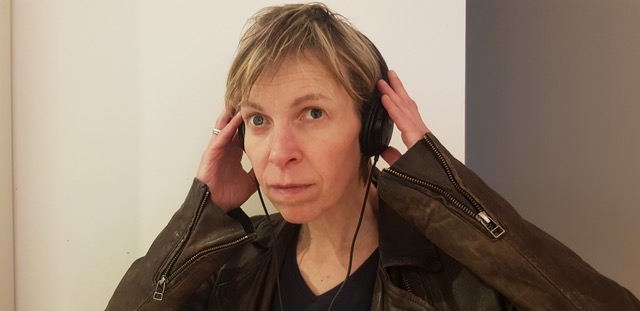
A white woman in her fifties with short light brown hair stands against a wall. She has black headphones on her head and wears a brown leather jacket with zippers at the wrist. Bright eyed she looks at the camera with her hands raised to the headphones.
Developing Your Voice — A Vocal Training Intensive Workshop Series with Alex Bulmer
About Alex Bulmer:
Alex Bulmer is an award winning Blind playwright, voice teacher, actor and performance maker with thirty five professional years working across Canada and the UK.
She finds joy and potency through mutual growth and original expression, is dedicated to inter-dependent practice, and guided by an invitation to follow the grain of her own wood.
Alex is co-creator of multiple Blind-led productions including May I Take Your Arm, Perceptual Archaeology, Gesture and Maddy and The Invisible Band of Groovers.
She is artistic director of Toronto-based Fire and Rescue Arts, which de-centres visuality from imagination to creation.
In 1990, Alex graduated with an Advanced Diploma in Voice Studies from the Royal Central School of Speech and Drama.
Since then, she has been supporting Blind and Sighted performers to experience vocal freedom – the deep connection between breath and voice, the energy of resonance and vibration and the dynamic physicality of speech.
About This Intensive Workshop Series:
Developing Your Voice is a special intensive workshop series that addresses the specific vocal skills needed by both audio describers of dance and self-describing dancers.
In Alex’s words: The human voice, your voice, is your primary instrument as a describer. When describing Dance, your voice is called upon to be more flexible and expressive. So let’s learn to play your vocal instrument well!
In these workshops, you will learn how to prepare your voice for description, and gain skills to enable you to express language in the most effective way.
The workshops will cover a brief overview of how the voice works, discuss how you can keep your voice healthy, and offer exercises to nourish and develop your vocality, and better engage with the physicality of language.
You will learn a warm up routine that you can practice to develop and support you to vocally best connect Blind audiences with the art of Dance, whether as an audio describer or dance or a self-describing dancer.
Workshop Dates and Details:
These intensive workshops are designed for the learning needs of different professional groups, but can be approached in a cumulative way.
They will be offered virtually on Zoom.
All workshops start at 4 PM (Eastern Time), and include 60 minutes of vocal technique followed by 30 minutes of open question and answer time.
Wednesday April 1, 2026: 4:00 PM to 5:30 PM (Eastern/New York Time)
Wednesday April 15, 2026: 4:00 PM to 5:30 PM (Eastern/New York Time)
Wednesday May 6, 2026: 4:00 PM to 5:30 PM (Eastern/New York Time)
Wednesday May 20, 2026: 4:00 PM to 5:30 PM (Eastern/New York Time)
Wednesday June 3, 2026: 4:00 PM to 5:30 PM (Eastern/New York Time)
Wednesday June 17, 2026: 4:00 PM to 5:30 PM (Eastern/New York Time)
Wednesday July 1, 2026: 4:00 PM to 5:30 PM (Eastern/New York Time)
Wednesday July 15, 2026: 4:00 PM to 5:30 PM (Eastern/New York Time)
Wednesday August 5, 2026: 4:00 PM to 5:30 PM (Eastern/New York Time)
Wednesday August 12, 2026: 4:00 PM to 5:30 PM (Eastern/New York Time)
To register for any of these courses please send an email to [email protected] with the subject line Developing Your Voice
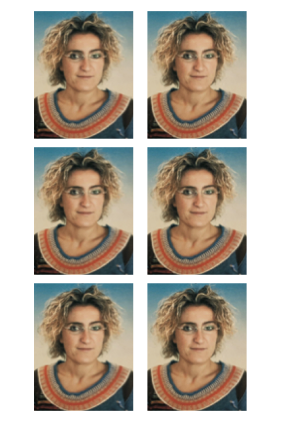
Valentina is pictured in a series of 6 images arranged like a contact sheet. She has curly hair that is light near the ends and darker towards the roots. She has a slight smile and wears a top that is dark blue-green with with tan and reddish orange stripes around the collar.
Intro to Simonson Jazz Dance with Valentina Bertani
About Valentina Bertani:
Valentina was born in 1977: she is a curly-haired child, full of verve, nice, resourceful and curious, a little explorer. Her journey into dance began at the age of two and a half and, over time, her great curiosity led her to experiment with different techniques and styles: from ballet, to hip hop, to belly dancing, up to modern and jazz dance.
Valentina studies hard and works in the meantime: she grows up dancing and, the more she grows, the stronger her bond with dance becomes. She became a teacher and began to share what she had learned and her enthusiasm for this art with young and old, without ever stopping. Valentina was born with an eye disease that, over the years, would lead her to gradually lose her sight. And it is precisely after the most beautiful moment of her life, the birth of her son Matteo, that she feels the need to hang up her dancing shoes.
Due to the worsening of her condition, she gave up dancing for 15 years, a period of great hardship during which she learned to come to terms with her new life. Her tireless tenacity and her innate curiosity never left her, even when she had to deal with a different life, which forced her to move in the world in a whole new way. Her bond with dance is so indissoluble that the flame of passion reignites…
In 2021 Valentina started the “Svista Dance” project which involves visually impaired and blind children and girls in the study of dance. This path is a stimulus for her to deepen her new relationship with dance and with her own body. Shortly thereafter, she meets Tereza Perez Ceccon, an American teacher, and begins studying the “Simonson” method with her, thanks to which she discovers a whole new way of dancing. The Simonson technique was created by the North American Lynn Simonson and suggests an organic approach to movement by promoting a more “intelligent”, conscious and respectful use of the body. What others call a limit, for her becomes an opportunity. Valentina graduated in this technique, still little known in Italy, but which offers invaluable tools to increase body awareness and self-confidence. Valentina is now the first blind teacher certified in the Simonson method.
MOVING IN THE DARK
Moving in the dark is a real exploration of oneself: a deep and adventurous journey into one’s self, a way to take care of oneself. But how can you explore yourself and move in space without the help of sight? It is done by breaking down the barriers of prejudice and the rigidity of conventions, moving without looking but only listening to one’s body. Who is this experience for? To all those who want to get in touch with their most profound, most intimate part, in a natural and harmonious way through a series of organic movements that allow you to release all those tensions that often make us lose sight of our needs and priorities. Not only that: this type of path can also be very useful for all those professionals who use the body as a tool of expression: singers, dancers, musicians, actors who want to improve their performance. Moving in the dark means walking more harmoniously and serenely in the world and experiencing it without the prejudices and pressures to which we are constantly exposed in everyday life.
TRAVELING WITH VALE
I would like to accompany you on a tour “in the dark” because I think it is the best way to understand yourself in relation to the outside world. The awareness of one’s volumes in space is very useful to be able to move with greater harmony and flexibility in everyday life. Movement is, after all, the primordial approach to existence and understanding, from within ourselves, how to eliminate the knots that limit us and the tensions that cage us is very effective in order to live more serene and relaxed. Very often our experience, which is also the beauty of us, leaves vivid and perceptible signs in our mind and consequently on our body: exploring ourselves by traveling through the body gives us the opportunity to increase energy, vitality and well-being! Entering within oneself, abandoning oneself to the wonder of darkness, with the help of the other senses, amplifies the benefits of movements exponentially!
The Darkness may initially seem impetuous to face, especially if tensions and stress are very important, but you are not alone: I will accompany you in your explorations, in your travels, to reassure you until you can be at ease and fully enjoy the work we are doing. Once you have tasted the freedom from the chains that kept you tied to the light, you will be much more free and aware… It may seem surreal, but no one better than me can make you understand how wonderful it is not to see what is around you, but rather to feel it and perceive it in a real and conscious way! Becoming blind was the best way for me to feel free! When I rediscovered movement in the dark, it seemed to me as if I had never moved properly in my life, even though I had been studying dance since I was 3 years old! The work you do is not important, your performance will improve more and more! If you trust me and want to devote some time to your well-being and to improving your skills, I am ready to accompany you! If you are an artist and want to improve your characteristics and skills, you can find safe help in the dark!
About This Workshop Series:
Intro to Simonson Jazz Dance is a ten class course that teaches the movement principles and exercises of Simonson method in an additive way, with each class gradually building to the complete, full-body class format.
This class is designed for blind and visually impaired adults with no prior experience with Simonson Jazz Dance, and is open to learners who have never studied dance before. This class is not recorded for copyright reasons, so attendance at all ten sessions is strongly encouraged.
Workshop Dates and Details:
These workshops are set up to build on one another and attendance at all 10 sessions is strongly encouraged.
The workshops will be offered virtually on Zoom.
Each workshop is 90 minutes long:
Session #1: Friday, April 3, 2026 from 2 PM to 3:30 PM (Eastern/New York Time)
Session #2: Friday, April 10, 2026 2 PM to 3:30 PM (Eastern/New York Time)
Session #3: Friday, April 17, 2026 2 PM to 3:30 PM (Eastern/New York Time)
Session #4: Friday, April 24, 2026 2 PM to 3:30 PM (Eastern/New York Time)
Session #5: Friday, May 1, 2026 2 PM to 3:30 PM (Eastern/New York Time)
Session #6: Friday, May 8, 2026 2 PM to 3:30 PM (Eastern/New York Time)
Session #7: Friday, May 15, 2026 2 PM to 3:30 PM (Eastern/New York Time)
Session #8: Friday, May 22, 2026 2 PM to 3:30 PM (Eastern/New York Time)
Session #9: Friday, May 29, 2026 2 PM to 3:30 PM (Eastern/New York Time)
Session #10: Friday, June 5, 2026 2 PM to 3:30 PM (Eastern/New York Time)
To register:
This course requires completion of a student intake form and a registration conversation with Valentina, the instructor of the course.
To start your registration process, please send an email to [email protected] to [email protected] with the subject line Intro to Simonson Jazz Dance
Registration for Intro to Simonson Jazz Dance closes on March 30, 2026, so please do not wait to begin your registration process — Valentina is so excited to teach you!
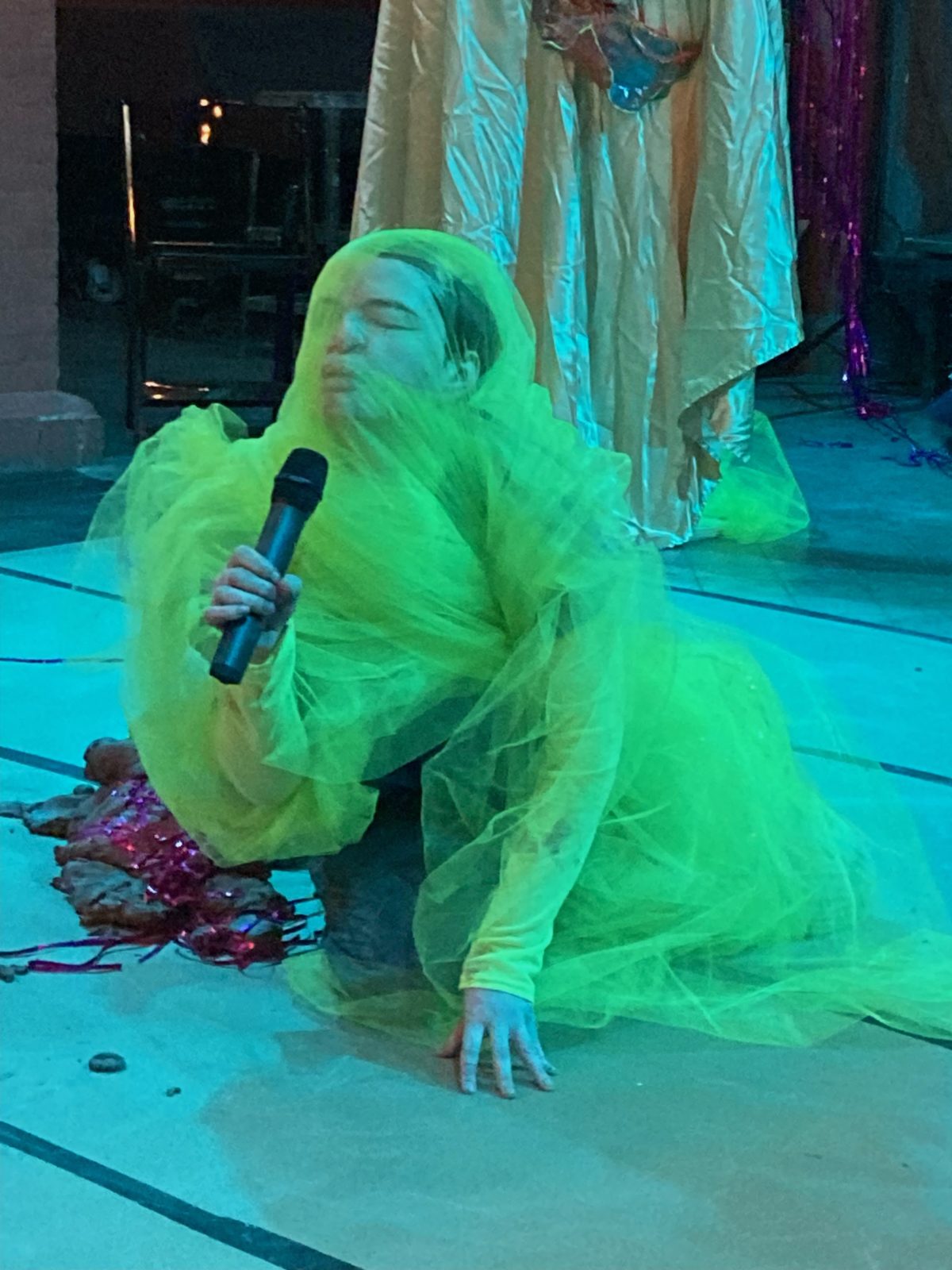
Shannon crouches on the floor holding a microphone with neon yellow/green tulle draped across their body and smushing their face. They speak/sing into the microphone with their eyes closed. Photo credit: And Keller
Improvising with our Ecosystems: a Laboratory and Introduction to Improvising with Movement, Sound, and Self-Audio Description with Shannon Brooks
About Shannon Brooks:
Shannon Brooks is a multisensory, multimedia artist grounded in iterative, time-based experimentation. Their practice engages with the full range of our senses and draws on ritual, material, and performance, to construct strange worlds between the physical and the ephemeral. Their practice researches the interconnected systems between ecology, decay, the body, disability, power, ghosts, geologic time, movement, textile, and memory.
Their practice decentralizes sight as the ultimate means of validating experience, creating cacophonies of textures and sounds to explore the dimensions of our senses. As a low-vision person, Shannon understands accessibility as an imperfect creative force that transforms time, space, and power structures.
About This Workshop Series:
A monthly ritual to connect with, stretch into and experiment with the glory of our senses.
We ground into our practice with guided imaginative eco-embodiments and learning different approaches to improvising with movement and sound. Then we will play with, touch, taste, listen, and smell materials found in our own everyday life to celebrate and map out the landscapes of our sensorial experiences. Our time will conclude by folding our somatic exploration into our improvisations, and developing imperfect audio descriptions reflecting on our practice together.
After each practice, participants will receive an overview of the improvisation techniques we explored, music selections, and an ever-evolving dictionary of terms specific to Shannon’s class series.
Workshop Dates and Details:
These workshops are set up to build on one another but can be taken separately.
They will be offered virtually on Zoom.
Each workshop is two hours long:
Sunday, February 1, 2026 – Improvising with Our Ecosystems with Shannon Brooks, 2 PM to 4 PM (Eastern/New York Time)
Sunday, March 1, 2026 – Improvising with Our Ecosystems with Shannon Brooks, 2 PM to 4 PM (Eastern/New York Time)
Sunday, April 12, 2026 – Improvising with Our Ecosystems with Shannon Brooks, 2 PM to 4 PM (Eastern/New York Time)
To register for this workshop series, it is highly recommended that you fill out the Google Form linked here: