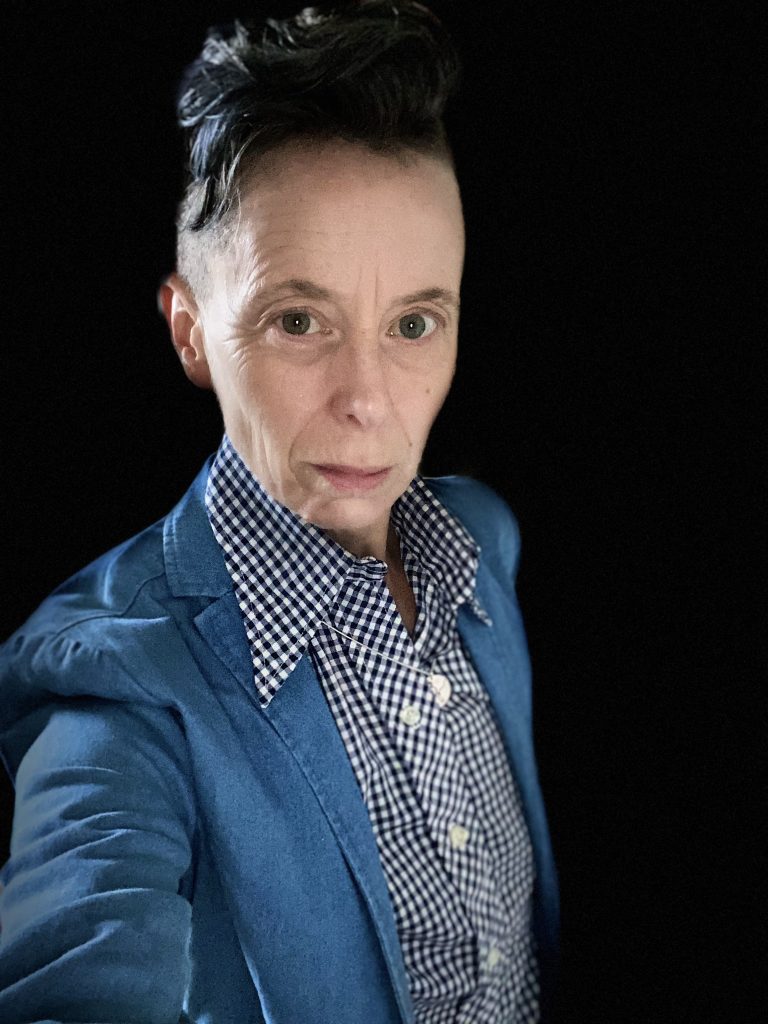
Tell Your Story: An Introduction to Narrative Podcasting with H. May
Workshops will be held via Zoom on Tuesdays from 3-5 PM Eastern (New York) Time, June 16, June 30, July 14, July 28, August 11, and August 25.
Student Cap: 10
This six-week course is designed to introduce blind and low-vision artists to sound design, storytelling techniques, recording / editing processes and tools, and organizational approaches useful in the production of narrative podcasts. This workshop is designed to take participants through the process of writing a short story, enhancing it through sound, and sharing it with others. H. May is a blindish theatre artist trained in a multitude of techniques for generating performance material from personal experience. As a theatre director married to a sound designer and podcast producer, their work consistently benefits from the incorporation of sound and audio description as an integral part of storytelling. This class is designed to meld theatre and digital sound recording techniques in the creation of imaginative narrative podcasts.
While primarily a live theatre artist, H. increasingly finds themself turning to sound art as a means of storytelling that scratches their sensory desires and their exploratory impulses. As a blindish artist largely isolated from working with other blind and low-vision artists, H. looks forward to facilitating this workshop for the opportunity to learn how to make the art we hope to hear in the world alongside other members of the blind community.
Schedule: Six two-hour sessions, every 2 weeks starting June 16.
June 16, Week One – Introduction to Podcasting and Preparing the Voice
Topics include: A brief overview of podcasting (what it is, why it is popular); discussion of podcasts folks are listening to and why; introductory vocal exercises
Homework: Listening to sample podcasts, bringing in an example of something they like, and telling the story of an object that means something to them
June 30, Week Two – Storytelling (what makes for good storytelling in terms of structure)
Topics include: Discussion of sample podcasts from homework as regards how they tell stories
Homework: Reading part of the script analysis text Backwards and Forwards, analyzing a fairy tale for what makes it compelling, reworking object story to implement storytelling techniques
July 14, Week Three – The nature of sound and recording sound
Topics include: techniques for recording sound on cell phones, overview of cheap recording devices, demonstrations of sound recordings
Homework: Record something familiar that is instantly recognizable and record something familiar that is hard to recognize
July 28, Week Four – Combining story and sound through editing
Topics include: listening to examples of sounds used to heighten storytelling. These sounds include multiple voices for characters, underscoring with music, copyright issues, other sound effects and sound effect libraries
Homework: Record your object story but bring sound into it.
August 11, Week Five – Continuation of Week Four, working with students on their projects
Homework: Continuing Editing Object Story
August 25, Week Six – Organizing / Planning for a longer series and publishing your podcast
Topics include: Learning how to map out a season, assessing sustainable timelines, introduction to podcasting platforms
About H
H. May (they / them) is a blindish* Professor of Theatre at Hobart and William Smith who loves theatre for its adventures. H has reveled in a career that has allowed them the grace and flexibility to be always in transition, transforming their artistry and scholarship to suit the needs of the moment. And their current moment is building creative spaces and collaborations that embrace the aesthetic possibilities of multi-sensory art. H. is fortunate to have a spouse who is a professional sound designer and podcast producer. Together they have been integrating sound into theatre productions for three decades, and have broadened this work into film and audio production over the past six years. H.’s autoethnographic film “Awaiting Tiresias” explores the shifting emotional landscape of the early stages of a blindness diagnosis. The film is fully audio described. “Awaiting Tiresias” was screened at the Great Lakes International Film Festival, the Together! Disability Film Festival, was a semi-finalist for the Blow-Up Arthouse Filmfest in Chicago, and won Disability Awareness and Contemporary Issues / Raising Awareness Awards of Merit from the IndieFEST Film Awards. They have also performed a livestream version of “Awaiting Tiresias” at multiple conferences, including the Hong Kong Academy of Performing Arts Digital Humanities Conference and the Digital Research in the Arts and Humanities Conference (UK).
While H.’s work in the theatre has primarily been as a director, they have enjoyed learning among fellow professional artists at performance and devising workshops and residencies with Indy Convergence (2019), La MaMa Umbria International Directors Symposium (2014, 2017), Dell’Arte International Summer Intensive (2015), Pig Iron Theatre (2018), and Directors Labs North (2015) and West (2014, 2017).
As an artist who has gone blind in the late stage of their career in a rural community with few other blind people (never mind in the theatre), H. has largely had to teach themself new approaches to theatre. They were thrilled to discover Dark Room Ballet a few years ago, the first blind community they’d experienced. Unsurprisingly, it was also the first audio description training they received that actually treated blind audiences as full collaborators and artists. They are honored and excited to be among the rotating faculty for Dark Room Ballet, where they can continue to learn in community with fellow blind and low-vision artists.
* While they could use the term “legally blind,” H. fights against medicalized gatekeeping and feels that “blindish” is a more accurate description of the way their sight fluctuates depending upon the circumstances.
To Register for this course please email [email protected] to receive the intake questions and instructions for scheduling an interview with H.